Seminar on Establishing and Practicing a Correct View of Performance, given by the Shanghai Institute of Management

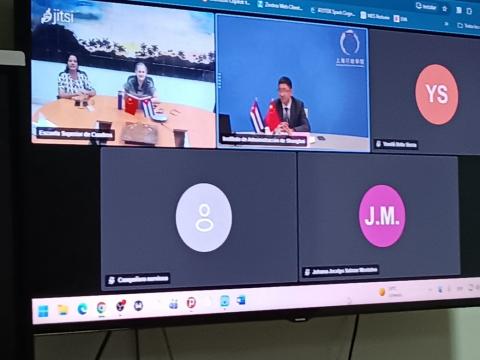
On May 26, the Shanghai Institute of Management (SAI) held an online seminar, "Establishing and Practicing a Correct View of Performance," for the State and Government Cadre School (SGCS). The seminar was attended by over 30 executives who had graduated from the SGCS's programs and by faculty members. It was conducted within the framework of the Continuity Memorandum of Understanding signed on July 8, 2025, between SGCS and SAI. Professor Li Zongjian, Director and Professor of the Leadership Science Department at the Party School of the Shanghai Municipal Committee of the CPC and the Shanghai Institute of Management, addressed General Secretary Xi Jinping's visionary, insightful, and deeply reflective points regarding the establishment, practice, and evaluation of a correct view of performance, as well as his own insights. The three central points of the conference were: 1) The great importance of establishing and practicing a correct view of performance, 2) The scientific basis of establishing and practicing a correct view of performance, and 3) Practical requirements for establishing and practicing a correct view of performance. In his presentation, the professor emphasized that being a cadre means getting things done and achieving success; otherwise, you cannot remain steadfast. To generate results, we must first address the questions of for whom we are generating results and what kind of results we are generating. He then specified that communists carry out their work and achieve political success to benefit the people. At the conclusion of the conference, the Rector of ESCEG, Mercedes Delgado Fernández, inquired about how the aspects presented in the conference regarding the correct evaluation of cadre performance are reinforced during the classes taught at her Academy. The professor explained that they have established and offer regular courses on the development and practice of managerial performance and practical skills. These courses strengthen managers' competencies, and during their daily work at different management levels, they are given assessments of their performance in their respective roles. Furthermore, at his academic institution, the courses include analyses of performance ethos, encouraging managers to reflect on and analyze their own understanding of their roles. Through these exchanges, they can evaluate whether their understanding or vision is correct and help them refine it if necessary.